High-Precision Aluminium Anodizing & Advanced Surface Finishing Services
Graphler delivers controlled electrolytic anodizing, Type III hardcoat finishing, corrosion protection, and precision masking solutions engineered to enhance surface hardness, wear resistance, and dielectric strength for aluminium components across prototype to full-scale production runs.
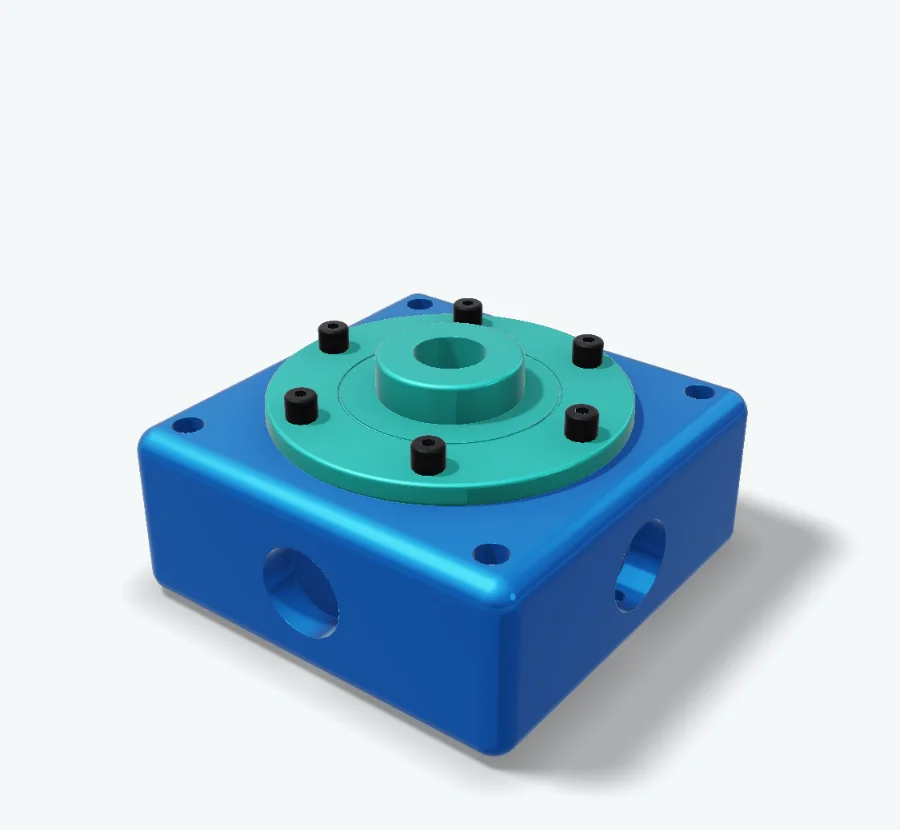
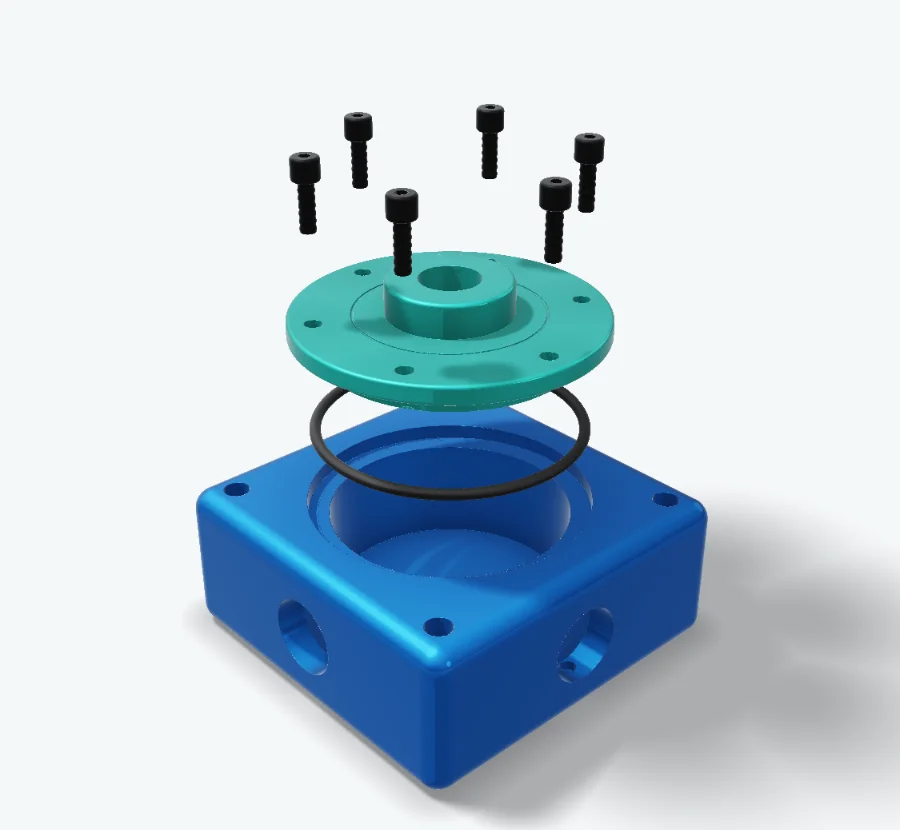
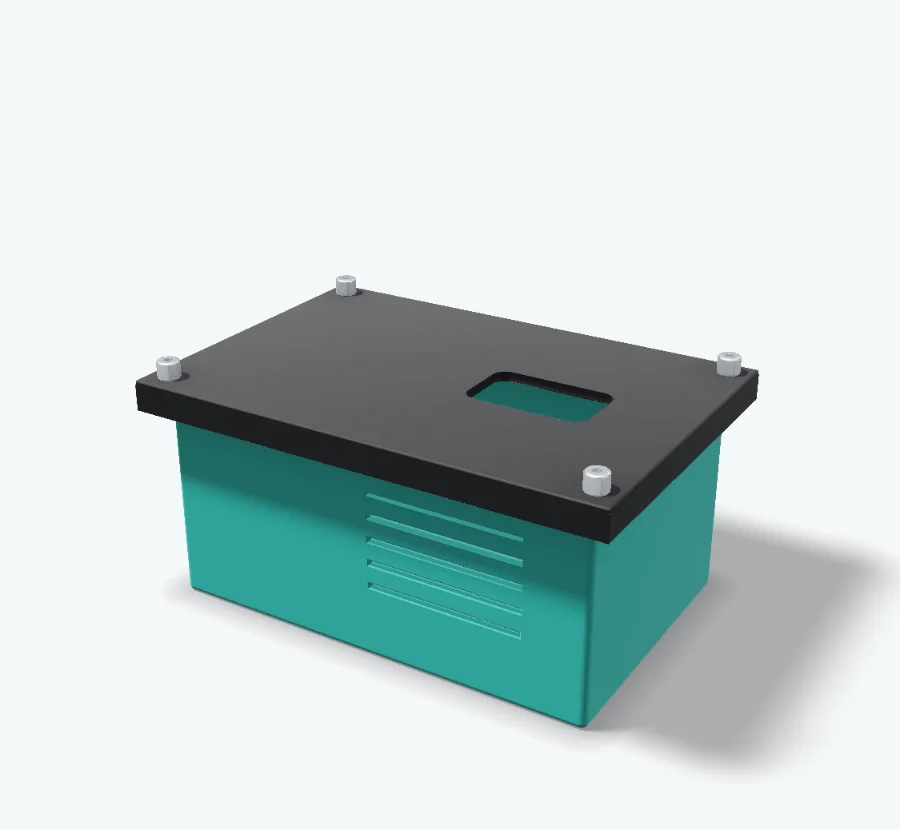
- Machined housing
- O-ring
- Anodized cover
- Cap screws
Engineered Anodic Oxide Protection for Extreme Duty Applications
Raw aluminium components exposed to friction, moisture, or harsh atmospheric conditions are prone to surface corrosion, galling, and cosmetic degradation. At Graphler, our post-processing surface finishing division pairs controlled electrochemical oxidation with precise chemical pre-treatments to convert the aluminium surface into a durable, integrated aluminium oxide layer.
Specialized Anodizing Processes Offered
Type II Sulfuric Acid Anodizing
Standard electrolytic coating creating a clear or dyed corrosion-resistant oxide layer (5 to 25 microns thick), ideal for visual appeal, wear protection, and electrical insulation.
Type III Hardcoat Anodizing (Hard Anodizing)
Low-temperature, high-voltage electrolytic processing producing an ultra-dense oxide coating (25 to 50+ microns thick) with surface hardness reaching up to 60-70 Rockwell C, built for high-friction and abrasive environments.
Type I Chromic Acid Anodizing
Thin, highly ductile anodic coating (1 to 5 microns) engineered for flight-critical aerospace structures and fatigue-sensitive components requiring minimal dimensional change.
Custom Color Anodizing & Decorative Dyeing
Precision organic and inorganic dye absorption providing vibrant, light-fast colors (Black, Red, Blue, Gold, Green, Hardcoat Olive Drab) with uniform shade consistency across production batches.
Chemical Conversion Coating (Chromate / Alodine)
MIL-DTL-5541 compliant chromate conversion providing a conductive anti-corrosion barrier and primer base for secondary bonding or painting.
Tailored Anodizing Parameters Across Aluminium Grades
Different aluminium alloys contain varying percentages of silicon, copper, zinc, and magnesium that influence anodic growth rate, coating density, and final dye absorption. Graphler adjusts bath chemistry, current density, and rack positioning to suit specific alloy compositions.
6000 Series (Mg-Si)
Alloy Grades
Anodizing Compatibility & Performance
Excellent for Type II color anodizing and Type III hardcoat; yields crisp, clear finish
Typical Industrial Applications
7000 Series (Zn)
Alloy Grades
Anodizing Compatibility & Performance
High-strength alloy; requires specialized bath controls for Type III hardcoat; produces rich dark tones
Typical Industrial Applications
2000 Series (Cu)
Alloy Grades
Anodizing Compatibility & Performance
High copper content; yields thinner, softer oxide layers; Type I or specialized Type II recommended
Typical Industrial Applications
5000 Series (Mg)
Alloy Grades
Anodizing Compatibility & Performance
Outstanding corrosion resistance; excellent for Type II clear or color anodizing
Typical Industrial Applications
Cast Aluminium Alloys
Alloy Grades
Anodizing Compatibility & Performance
Requires specialized cleaning to manage silicon inclusions; best suited for Alodine or Type II
Typical Industrial Applications
Precision Masking Integration & Oxide Growth Planning
Because anodizing converts a portion of the base aluminium while building up an outward oxide layer (typically 50% penetration / 50% build-up), unmonitored coating thickness can cause tight-tolerance bores and threads to bind. Graphler integrates early Design for Manufacturability (DFM) support to calculate dimensional allowances before machining and anodizing.
Design for Manufacturability (DFM) Review
Early CAD evaluation to identify critical bearing fits, ground journals, and fine pitch threads that require pre-machining compensation or paint/anodize exclusion.
Precision Chemical Masking
Applying specialized high-temperature masking tapes, liquid lacquers, and custom silicone plugs to keep critical threaded holes, press-fit bores, and ground mating faces completely oxide-free.
Racking & Contact Point Engineering
Custom titanium and aluminium racking fixtures engineered to place electrical contact marks inside non-critical internal features, preserving external cosmetic surfaces.
Stringent Quality Assurance & Layer Verification
Quality is built into every anodizing batch through structured chemical controls, automated rectifier tracking, and rigorous post-treatment seal testing:
ISO 9001 Certified Quality System
Standardized operational controls governing bath temperature, acid concentration, current density, and sealing tank quality.
Eddy-Current Coating Thickness Testing (ASTM B244)
Non-destructive verification of anodic oxide film thickness across critical part surfaces to ensure drawing compliance.
Corrosion & Seal Quality Verification (ASTM B117 / ISO 3210)
Acid-dissolution and salt-spray testing to confirm complete pore sealing and long-term corrosion resistance.
Full Material & Process Traceability
Comprehensive anodizing process logs, coating thickness reports, material test certificates, and batch traceability provided with every order.
Our Engineering-Led Manufacturing & Finishing Execution
- Step 01
Express Quoting
Upload 3D CAD files for fast pricing backed by a two-stage technical feasibility review.
- Step 02
Order Confirmation & Finishing Planning
Dedicated engineering review to finalize anodizing type (I/II/III), color code, coating thickness, and masking drawings.
- Step 03
Primary Machining & Pre-Treatment
Precision CNC machining, deburring, alkaline cleaning, and acid etching or bead blasting to establish uniform surface roughness.
- Step 04
Controlled Electrolytic Anodizing & Dyeing
Anodic layer formation under automated voltage monitoring followed by color dyeing and hot water/nickel acetate sealing.
- Step 05
Quality Verification & Inspection
Dimensional verification, coating thickness checks, color-match evaluation, and surface inspection.
- Step 06
Global Shipping & Real-Time Tracking
Export-compliant protective packaging, worldwide shipping support, and online access to real-time status updates.
Technical questions about Anodizing
What is the main difference between Type II and Type III hardcoat anodizing?
Type II sulfuric anodizing produces a thinner coating (5 to 25 microns) primarily designed for corrosion resistance, decorative color dyeing, and moderate wear. Type III hardcoat anodizing operates at lower bath temperatures and higher voltages to produce a much thicker, denser oxide layer (25 to 50+ microns) with surface hardness up to 60-70 Rockwell C for extreme wear resistance.
How does Graphler account for dimensional build-up during anodizing?
Anodizing grows both inward into the base metal and outward from the surface in roughly a 50/50 ratio. For a 20-micron Type II coating, the part's dimension increases by approximately 10 microns per surface. Graphler's engineering team factors this growth into the pre-machining dimensions or applies precision masking to preserve tight tolerances down to ±0.0002 inches.
Which CAD file formats are accepted for an anodizing and manufacturing quote?
You can upload your 3D CAD models directly through our quote engine in STEP (.stp), IGES (.igs), STL (.stl), or compressed (.ZIP) file formats.
Submit Your 3D CAD Model for an Express Quote
Ready to enhance the wear resistance, dielectric strength, and aesthetic finish of your aluminium parts? Partner with Graphler for engineering-led anodizing, surface finishing, and precision component production.