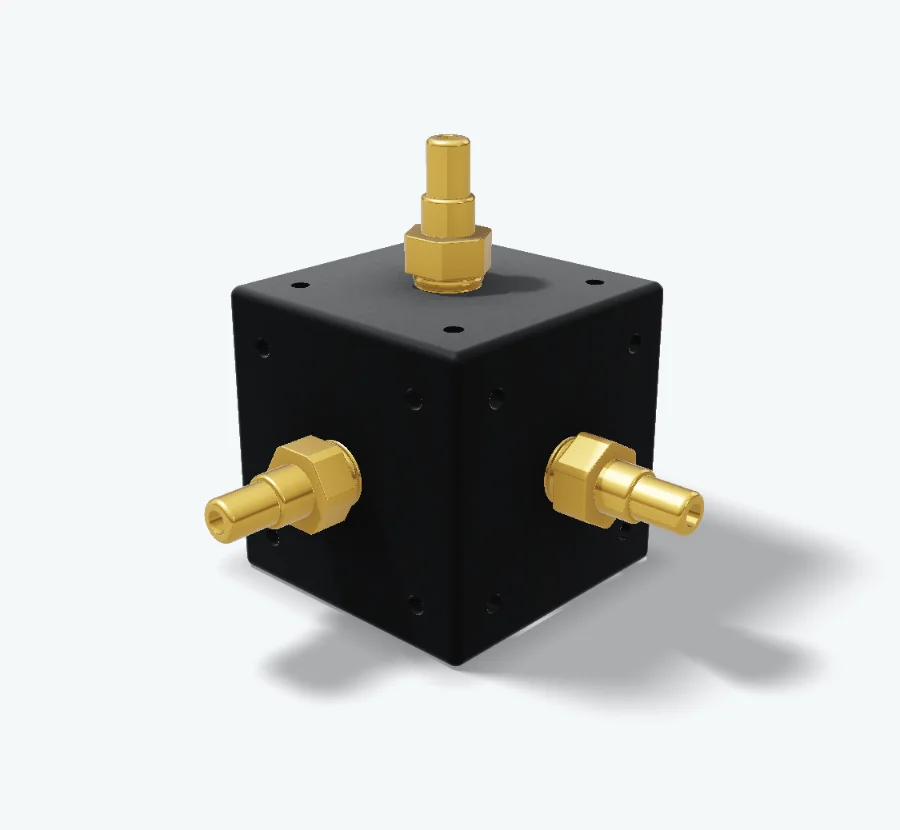
High-Precision Blackening & Chemical Black Oxide Coating Services
Graphler Manufacturing Solutions delivers controlled chemical conversion blackening and black oxide finishing engineered to provide non-reflective, anti-galling, and corrosion-resistant surfaces on steel, tool steel, and stainless steel components without altering critical dimensional tolerances.
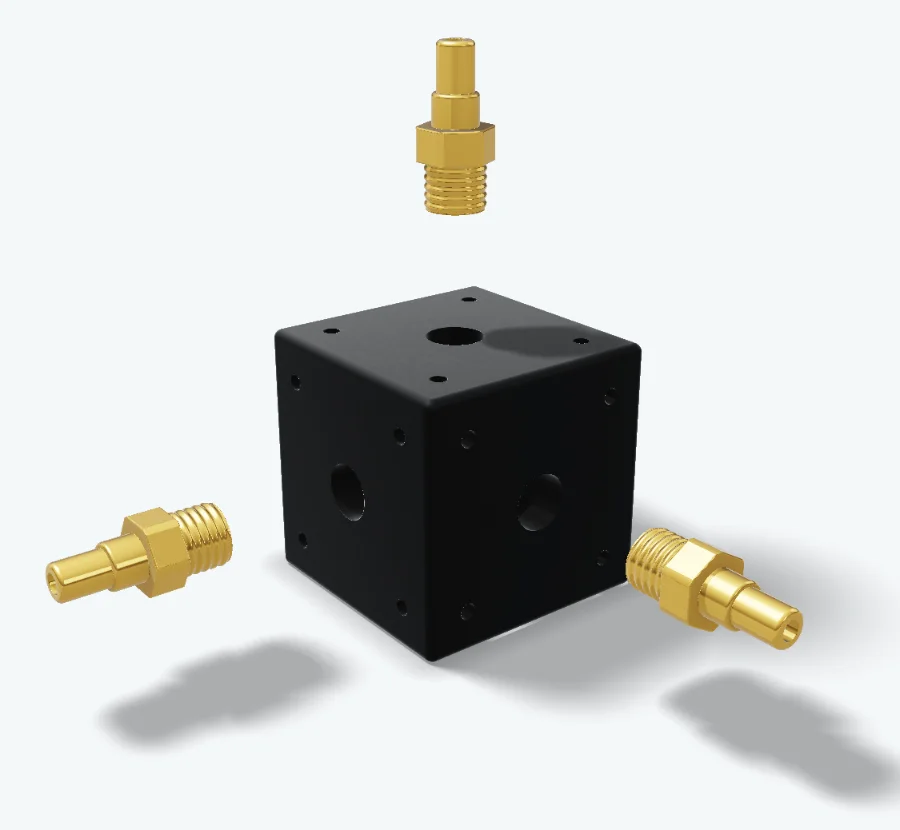
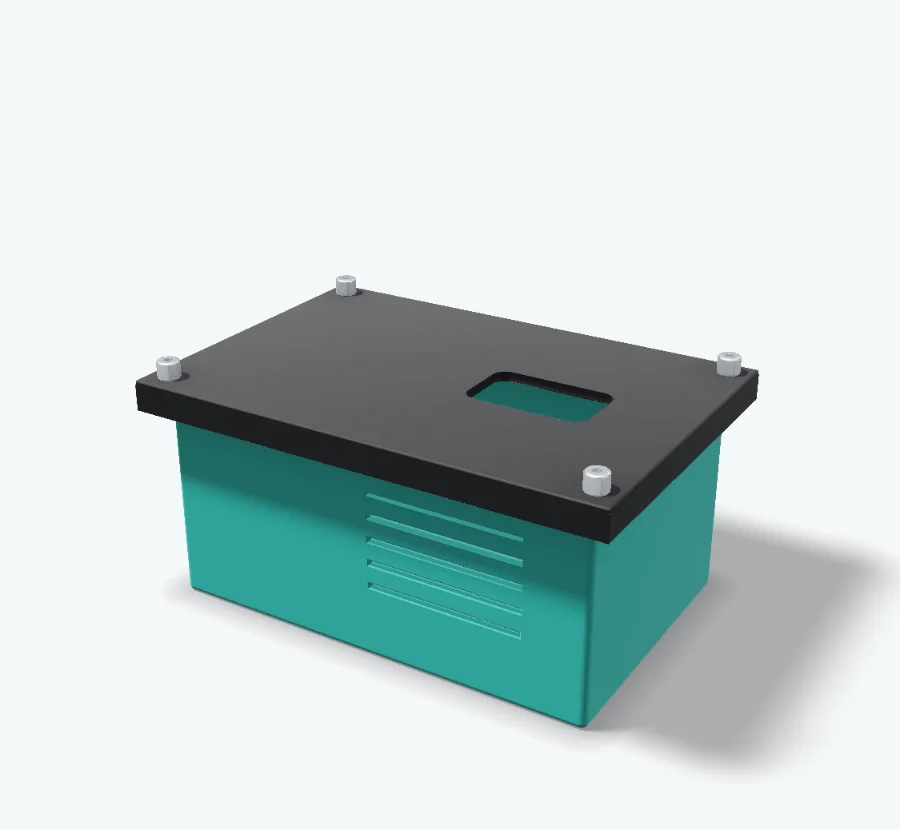
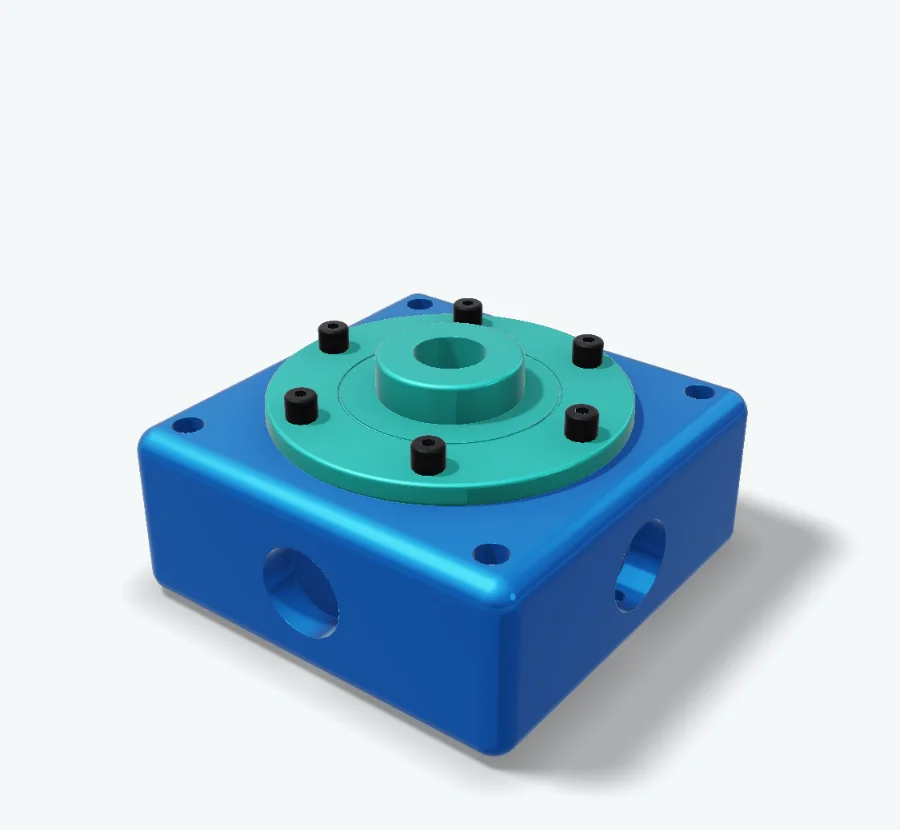
- Black oxide block
- Top port fitting
- Side port fitting
- Front port fitting
Engineered Conversion Coating with Zero Dimensional Change
When precision fasteners, machine tool spindles, gear assemblies, and optical housings require surface protection, glare reduction, and anti-galling properties, electroplating or liquid painting can add unwanted surface build-up that binds tight mechanical fits. At Graphler, our post-processing surface finishing department utilizes chemical black oxide conversion blackening17. Instead of depositing a layer on top of the substrate, the black oxide reaction converts the outer iron layer of ferrous alloys into black iron oxide (magnetite, $Fe_3O_4$), preserving pristine drawing tolerances down to the micron14.
Specialized Blackening Operations Offered
Hot Black Oxide Coating (MIL-DTL-13924)
High-temperature chemical immersion forming a deep, uniform black conversion coating on carbon steel, alloy steel, and cast iron components.
Stainless Steel Chemical Blackening
Specialized oxidizing acid bath treatment designed to produce rich black protective surfaces on austenitic and martensitic stainless steel grades (300 and 400 series).
Cold & Mid-Temperature Blackening
Room-temperature and mid-temp chemical blackening for delicate assemblies, non-critical tooling, and heat-sensitive alloys where low thermal stress is required.
Supplementary Oil & Wax Post-Treatments
Application of water-displacing rust preventative oils, microcrystalline waxes, or dry-to-touch synthetic sealers to maximize corrosion resistance.
Optical Anti-Glare Finishing
Producing matte, non-reflective black surfaces for optical instruments, laser housings, and aerospace interior mechanisms.
Material Versatility for Tooling, Fasteners & Precision Mechanisms
Our chemical blackening process supports a broad range of ferrous metals, with chemistry parameters tailored to specific alloy compositions and hardness levels.
Carbon & Low-Alloy Steels
Supported Metal Grades
Coating Characteristics & Performance
Deep jet-black finish; excellent oil absorption; zero dimensional change
Typical Industrial Applications
Tool & Die Steels
Supported Metal Grades
Coating Characteristics & Performance
Maintains heat-treated surface hardness; reduces anti-galling on slide faces
Typical Industrial Applications
Stainless Steels
Supported Metal Grades
Coating Characteristics & Performance
Rich satin black conversion; retains base corrosion resistance
Typical Industrial Applications
Cast & Ductile Irons
Supported Metal Grades
Coating Characteristics & Performance
Uniform matte black finish; sealing of surface graphite inclusions
Typical Industrial Applications
Zero-Buildup Tolerancing & Anti-Galling Engineering
Because blackening is a chemical conversion rather than a plated deposit, it is the preferred surface treatment for close-tolerance internal threads, reamed pin holes, and precision bearing journals1. Graphler integrates early Design for Manufacturability (DFM) support to verify surface preparation and oil-retention requirements before treatment89.
Design for Manufacturability (DFM) Review
Collaborative CAD evaluation to ensure part geometry allows complete chemical drainage during bath transfer9.
Anti-Galling Protection for Threaded Assemblies
The porous magnetite structure absorbs protective oils, dramatically reducing friction and preventing thread galling under high torque loading.
Alignment with Precision CNC Machining
Coordinating blackening cycles directly with pre-finish CNC turning, milling, and grinding operations to maintain ultra-tight tolerances up to ±0.0002 inches1more_horiz.
Stringent Bath Controls & Corrosion Resistance Verification
Quality is built into every blackening run through automated chemical titration, temperature regulation, and rigorous post-treatment testing15:
ISO 9001 Certified Quality System
Standardized operational controls governing bath chemical concentrations, immersion times, and oil tank cleanliness1.
Smut & Adhesion Testing
Wiping and tape-adhesion verification to confirm a clean, non-rubbing conversion layer free of loose surface smut.
Humidity & Salt-Spray Resistance (ASTM B117 / MIL-STD-171)
Verified oil-sealed black oxide samples tested under humidity chambers to confirm long-term shelf life and rust prevention.
Full Material & Batch Traceability
Comprehensive coating certificate of compliance, material test reports (MTRs), and batch-level traceability provided with every order1.
Engineering Precision Delivered Systematically9
- Step 01
Express Quoting
Upload 3D CAD files for fast pricing supported by a two-stage technical feasibility review25.
- Step 02
Order Confirmation & Process Planning
Dedicated engineering review to finalize blackening specification (MIL-DTL-13924 class), oil post-treatment type, and drawing tolerances5.
- Step 03
Primary Component Fabrication
Precision CNC machining, turning, or grinding in a controlled shop environment5.
- Step 04
Multi-Stage Chemical Surface Prep & Blackening
Degreasing, acid pickling, hot black oxide immersion, neutralizing, and double rinsing.
- Step 05
Post-Treatment Oil Sealing & Quality Inspection
Application of rust preventative oil/wax, smut testing, dimensional re-verification, and visual inspection711.
- Step 06
Global Shipping & Real-Time Tracking
Export-compliant protective packaging, worldwide shipping support, and online access to real-time status updates11.
Technical questions about Blackening
Does black oxide coating change the dimensions of precision machined components?
No. Black oxide is a chemical conversion process that converts the surface iron of the workpiece into magnetite ($Fe_3O_4$). Unlike plating or painting, it causes zero measurable dimensional build-up, making it ideal for tight-tolerance features up to ±0.0002 inches14.
What is the primary purpose of applying oil or wax after black oxide blackening?
Black oxide alone provides limited atmospheric corrosion resistance. The microscopic porous structure of the magnetite coating absorbs supplementary oils or waxes, creating a durable barrier against rust and improving surface lubricity to prevent galling.
Which CAD file formats are accepted for a blackening and manufacturing quote?
You can upload your 3D CAD models directly through our quote engine in STEP (.stp), IGES (.igs), STL (.stl), or compressed (.ZIP) file formats6.
Submit Your 3D CAD Model for an Express Quote
Ready to enhance the anti-galling performance and aesthetic finish of your precision steel components?3Partner with Graphler Manufacturing Solutions for engineering-led chemical blackening, surface finishing, and precision component production13.