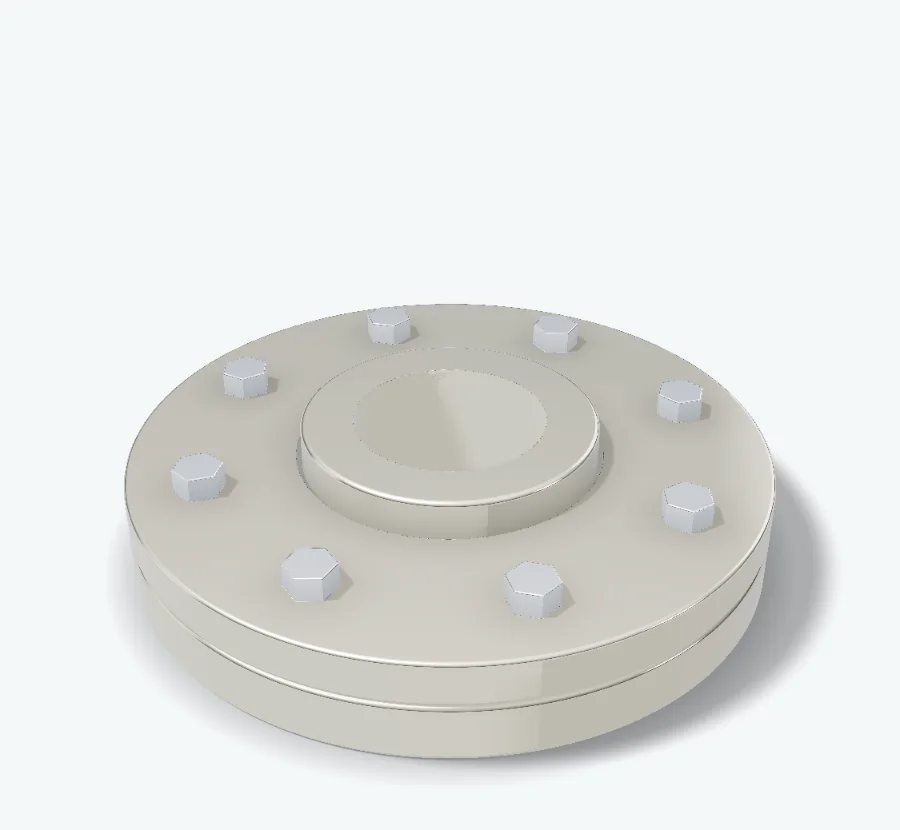
High-Precision Nickel & Chromium Plating Services
Graphler delivers controlled industrial electroplating, Electroless Nickel Plating (ENP), and hard chrome surface finishing engineered to maximize wear resistance, corrosion protection, surface hardness, and lubricity for critical engineering components across prototype to full-scale production runs.
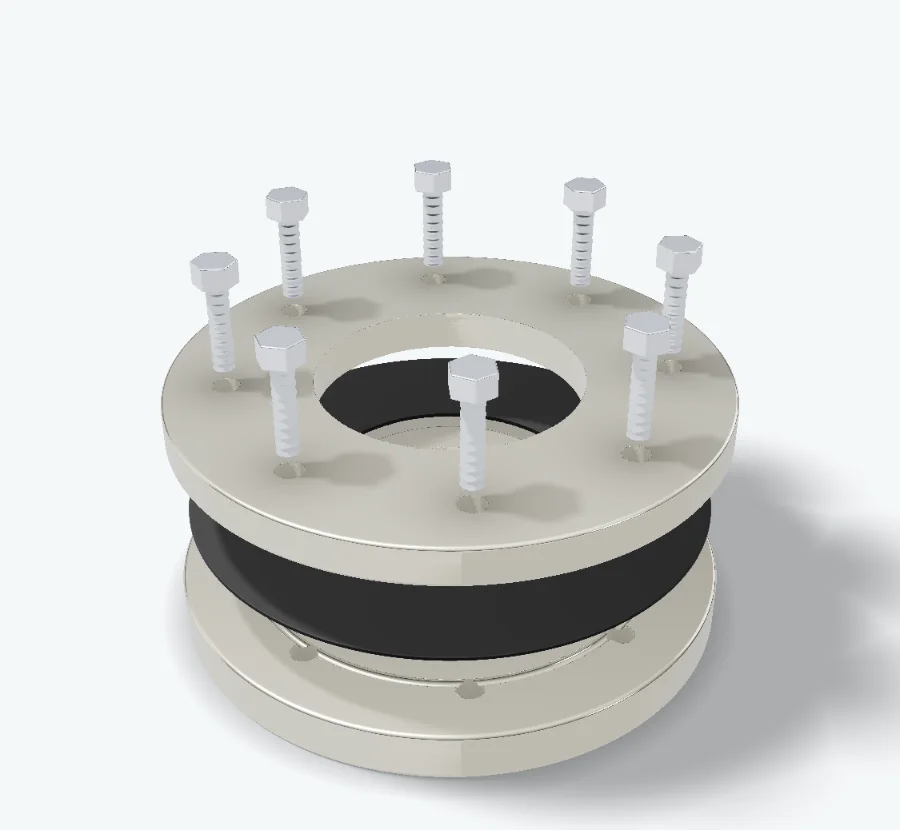
- Plated flange
- Gasket
- Mating ring
- Bolts
Engineered Metal Deposits for Extreme Wear, Corrosion & Lubricity Demands
Machined steel components, hydraulic pistons, pump impellers, and mould tooling operating under severe friction or corrosive chemical environments require durable metallic surface coatings. Unprotected metals are prone to galling, pitting, and dimensional degradation. At Graphler, our post-processing surface finishing division combines chemical pre-treatment with controlled electroplating and autocatalytic deposition to apply uniform nickel and chromium surface layers.
Specialized Plating Processes Offered
Electroless Nickel Plating (ENP)
Autocatalytic chemical deposition delivering a completely uniform nickel-phosphorus layer across complex geometries, deep blind holes, and internal bores without current density edge-buildup.
High-Phosphorus ENP (10-12% P)
Maximum corrosion resistance in acidic and marine environments.
Medium-Phosphorus ENP (6-9% P)
Balanced speed, wear resistance, and bright visual appearance.
Post-Plating Heat Treatment
Baking at elevated temperatures to increase deposit hardness up to 68-70 Rockwell C.
Hard Industrial Chromium Plating (Hard Chrome)
Heavy electrodeposited chromium layer (10 to 300+ microns) providing extremely high surface hardness (up to 70 HRC), low coefficient of friction, and high abrasion resistance for wear surfaces.
Decorative Bright Chrome Plating
Multi-layer nickel-chromium coating combining underlying corrosion protection with a reflective, tarnish-resistant aesthetic finish.
Electroplated Bright & Semi-Bright Nickel
Ductile electrolytic nickel undercoats engineered to provide corrosion protection and serve as a bonding layer for secondary plating.
Tailored Deposition Parameters Across Engineering Alloys
Our plating operations support a broad spectrum of base metals, with cleaning, etching, and strike-plating procedures tailored to specific alloy chemistries.
Carbon & Alloy Steels
Plating Process Options
Deposit Characteristics & Performance
High wear resistance, corrosion barrier, micro-crack oil retention
Typical Industrial Applications
Tool & Die Steels (D2, H13)
Plating Process Options
Deposit Characteristics & Performance
Maintains core hardness; extends die life and mould release properties
Typical Industrial Applications
Stainless Steels (300 / 400 Series)
Plating Process Options
Deposit Characteristics & Performance
Overcomes passive oxide film; high adhesion and anti-galling
Typical Industrial Applications
Copper & Brass Alloys
Plating Process Options
Deposit Characteristics & Performance
Excellent electrical conductivity, tarnish resistance, solderability
Typical Industrial Applications
Aluminium Alloys (6061, 7075)
Plating Process Options
Deposit Characteristics & Performance
Lightweight base with hard, wear-resistant metallic outer skin
Typical Industrial Applications
Precision Masking Integration & Plating Build-Up Management
Electroplating deposits material onto exposed conductive surfaces, altering critical component dimensions. Graphler integrates early Design for Manufacturability (DFM) support to calculate coating thickness growth and plan masking requirements before parts enter the plating line.
Design for Manufacturability (DFM) Review
Collaborative CAD evaluation to identify critical bearing journals, threaded holes, and seal seats that require dimensional pre-machining allowances or plating exclusion.
Precision Chemical & Mechanical Masking
Utilizing specialized high-temperature masking stop-off lacquers, silicone plugs, and custom lead/plastic shields to prevent unwanted plating build-up on precision threads and ground bores.
Uniformity Management for Electroless vs. Electrolytic
Recommending Electroless Nickel for complex internal cavities where electrical current distribution in electroplating would create non-uniform thickness.
Stringent Quality Assurance & Deposit Verification
Quality is built into every plating batch through structured chemical bath maintenance, automated current regulation, and rigorous post-treatment testing:
ISO 9001 Certified Quality System
Standardized operational controls governing bath chemical concentrations, pH, temperature, and current density.
X-Ray Fluorescence (XRF) & Magnetic Thickness Testing
Non-destructive measurement of plating thickness across critical surface zones to ensure drawing compliance.
Adhesion & Thermal Shock Testing (ASTM B571)
Bend, burnishing, and thermal quench testing to verify bond integrity between the plating layer and substrate.
Corrosion & Salt-Spray Resistance (ASTM B117)
Verified test coupons subjected to neutral salt-fog exposure to confirm long-term corrosion resistance.
Full Material & Process Traceability
Comprehensive plating process logs, coating thickness certificates, material test reports (MTRs), and batch traceability provided with every order.
Our Engineering-Led Manufacturing & Finishing Execution
- Step 01
Express Quoting
Upload 3D CAD files for fast pricing backed by a two-stage technical feasibility review.
- Step 02
Order Confirmation & Process Planning
Dedicated engineering review to finalize plating specifications (ENP vs. Chrome), thickness callouts, masking drawings, and heat-treat requirements.
- Step 03
Primary Machining & Surface Preparation
Component manufacturing via CNC turning, milling, or grinding followed by alkaline degreasing, acid pickling, or electro-cleaning.
- Step 04
Controlled Bath Plating
Deposition of nickel or chromium under automated temperature, chemical, and voltage monitoring.
- Step 05
Post-Plating Heat Treatment & Inspection
De-embrittlement baking (hydrogen relief), baking for maximum hardness (if ENP), thickness testing, and adhesion verification.
- Step 06
Global Shipping & Real-Time Tracking
Export-compliant protective packaging, worldwide shipping support, and online access to real-time status updates.
Technical questions about Plating (Nickel, Chromium)
What is the main difference between Electroless Nickel Plating (ENP) and Electroplated Hard Chrome?
Electroless Nickel Plating relies on an autocatalytic chemical reaction rather than electrical current, depositing a 100% uniform layer across all surfaces, including complex internal bores and threads. Hard Chrome uses electrical current to deposit a heavy, extremely hard chromium layer (up to 70 HRC) with a very low friction coefficient, making it ideal for heavy-wear exterior cylindrical surfaces like hydraulic piston rods.
Can Graphler achieve tight machining tolerances on plated components?
Yes. Graphler operates under ISO 9001 quality systems and accounts for plating layer growth during early-stage DFM review. By precision-masking non-plated features or pre-machining dimensions to accommodate deposit thickness, we maintain ultra-tight tolerances as close as ±0.0002 inches.
Which CAD file formats are accepted for a plating and manufacturing quote?
You can upload your 3D CAD models directly through our quote engine in STEP (.stp), IGES (.igs), STL (.stl), or compressed (.ZIP) file formats.
Submit Your 3D CAD Model for an Express Quote
Ready to enhance the wear resistance, hardness, and corrosion protection of your precision metal parts? Partner with Graphler for engineering-led nickel and chromium plating, surface finishing, and precision component production.